
The Sequence from Thought to Word
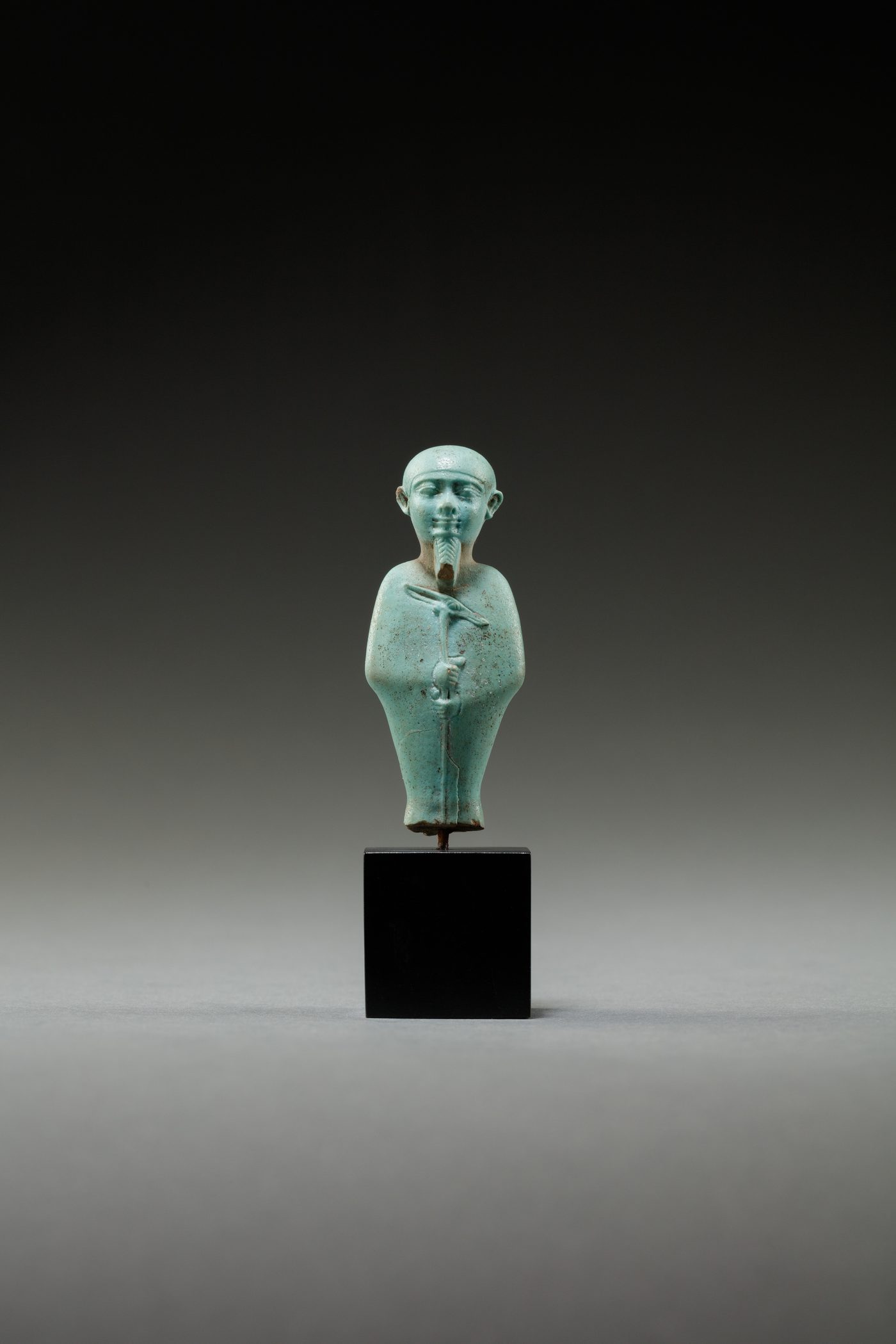
Around 710 BCE, the Kushite pharaoh Shabaka found a papyrus in the Great Temple of Ptah at Memphis, already old, already damaged by worms. Rather than let it disintegrate, he had its text carved permanently into a slab of black basalt. That slab, now known as the Shabaka Stone, preserves one of the oldest surviving accounts anywhere of how a thought is supposed to become a thing.
The text describes the god Ptah creating the world not through physical labor, and not through the watery emergence found in the older, rival Heliopolitan creation story, but through two organs working in sequence: the heart, and the tongue.
The inscription states it plainly: "there took shape in the heart, there took shape on the tongue." The heart conceives. The tongue speaks the name. Once spoken, the thing exists. A later line makes the mechanism explicit: "it is the tongue which announces the thought of the heart." The tongue does not generate anything new. It reports what the heart has already done.
This is a specific, orderly claim about how thought turns into reality, not a vague metaphor. Conception first, in an organ the Egyptians located all cognition in, not the brain. Then transmission to an organ built only for utterance. Then, and only then, existence. Skip a step, in this account, and nothing comes into being. A thought that never reaches the tongue stays exactly what it was: a shape in the heart, nowhere else.
Scholars studying the Shabaka Stone have noted its resemblance to later ideas, the opening of the Gospel of John ("In the beginning was the Word"), the creative speech-acts of Genesis. Whether those later texts inherited anything directly from Memphis remains a historical question the Shabaka Stone alone cannot settle. What the stone can settle is older and narrower: a civilization writing in the eighth century BCE, copying a document already ancient by then, built an entire theology on the premise that thought and speech are two separate stages of the same act, and that only the second one finishes it.
The claim does not require a modern reader to believe a god spoke the Ennead into being. It only asks the same question, quietly, of a much smaller thought: the one still sitting in the heart, never yet handed to the tongue.