
The Science of Thought, Right Now
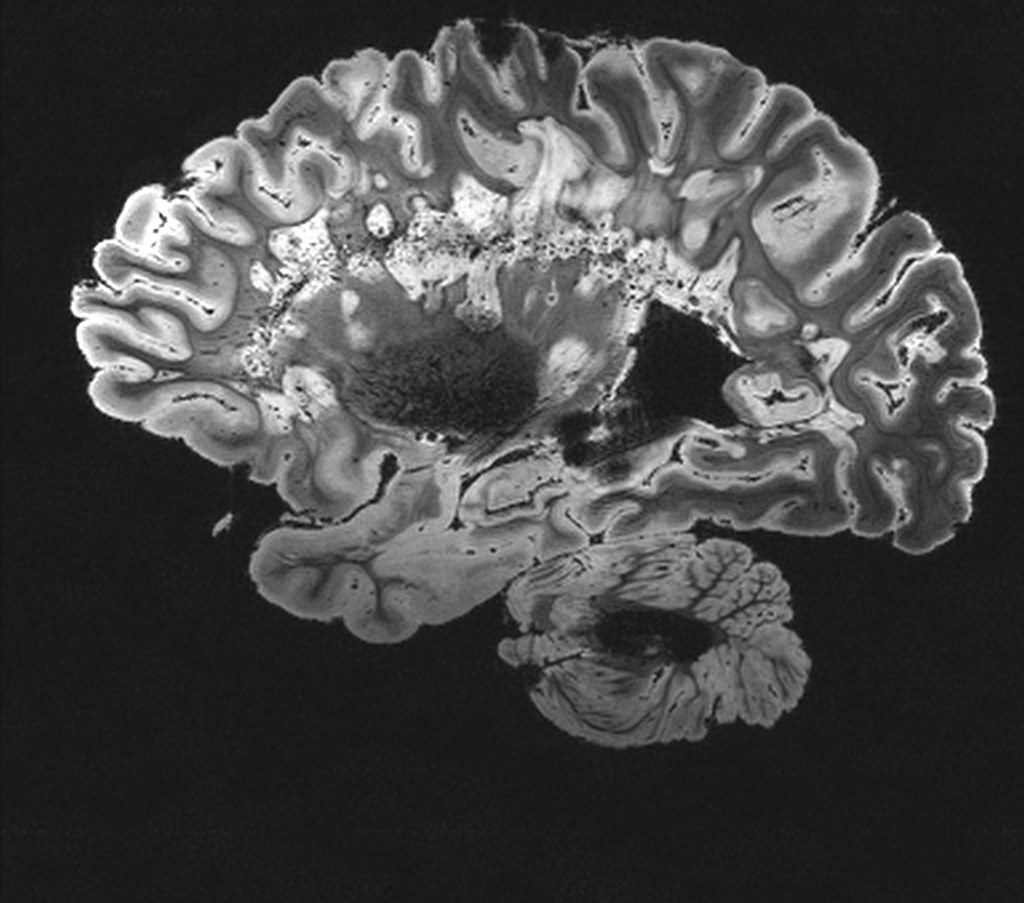
A thought can now be measured in several ways at once: by a scanner, by a questionnaire, by a language model reading what a person says out loud. This is a short tour of where that work stands in 2026, and who is doing it.
Africa first, because the written history starts there. Ancient Egyptian medical writing contains some of the earliest known descriptions of the brain. Today the data gap runs the other way. Most available brain data come from people of European ancestry, and a 2020 review found that people of African descent made up less than 5 percent of cohorts, on average, in brain-disorder research. A Wellcome-funded initiative called BRIDGE, the Brain Research International Data Governance and Exchange initiative, is building a framework for storing and sharing neuroscience data across Africa, South America, Europe, and North America.
A team led by Byeol Kim Lux and Choong-Wan Woo published a study in Communications Psychology in July 2026. Across datasets with 392 people in total, the way spontaneous thoughts moved, between positive and negative and between self-relevant and not, predicted how positive or negative a person's feelings tended to be. Higher predicted positive feeling also went with lower salivary C-reactive protein, a marker of inflammation. The same lab posted an earlier preprint, Bodily Maps of Spontaneous Thought, reporting that maps of where people feel sensations in the body could predict the emotional tone of a thought, with better results for positive thoughts than for negative ones. A preprint is not yet peer reviewed.
In July 2026, the National University of Singapore hosted the fourth Asia-Pacific Computational and Cognitive Neuroscience conference. The meeting moves between countries: Taiwan in 2020, Korea in 2024, Japan in 2025. NUS described the Asia-Pacific region as having evolved into a global leader in neuroscience research.
At the University of Liège, Arya Gilles, Arnaud D'Argembeau, and colleagues compared four ways of capturing spontaneous thought. Thought probes interrupt a person to ask what they were just thinking. Think-aloud has the person voice thoughts continuously. The 2025 study found think-aloud about as valid as probes for studying thought at rest, though thoughts in the laboratory differed from thoughts in daily life.
In Argentina, a team at CONICET and the University of Buenos Aires posted a preprint in April 2026. Participants rested while EEG was recorded, then described their spontaneous thoughts. Language models rated those descriptions on several dimensions, and machine-learning models tried to decode the ratings from the EEG. Decoding worked mainly for the emotional valence of a thought. The preprint is not yet peer reviewed.
In Canada, KPMG surveyed 684 students in 2025. Of those, 73 percent said they use generative AI for schoolwork, up from 59 percent in 2024, and 48 percent said their critical thinking skills had deteriorated since they started using it. A 2026 KPMG survey reported 75 and 51 percent. These are self-reports, not measurements of thinking.
In New Zealand, the University of Otago describes its MSc in Cognitive Science as the country's only dedicated interdisciplinary cognitive science programme, drawing on psychology, computer science, information science, linguistics, philosophy, anatomy, and zoology.
No single lab, on any continent, holds a complete account of what a thought is. What the current work shows is that the questions are being asked from many places at once, from Buenos Aires to Liège, and from Singapore to Dunedin, each running a different instrument over the same, still largely unmapped, territory.