
A Thought Measured in Knots
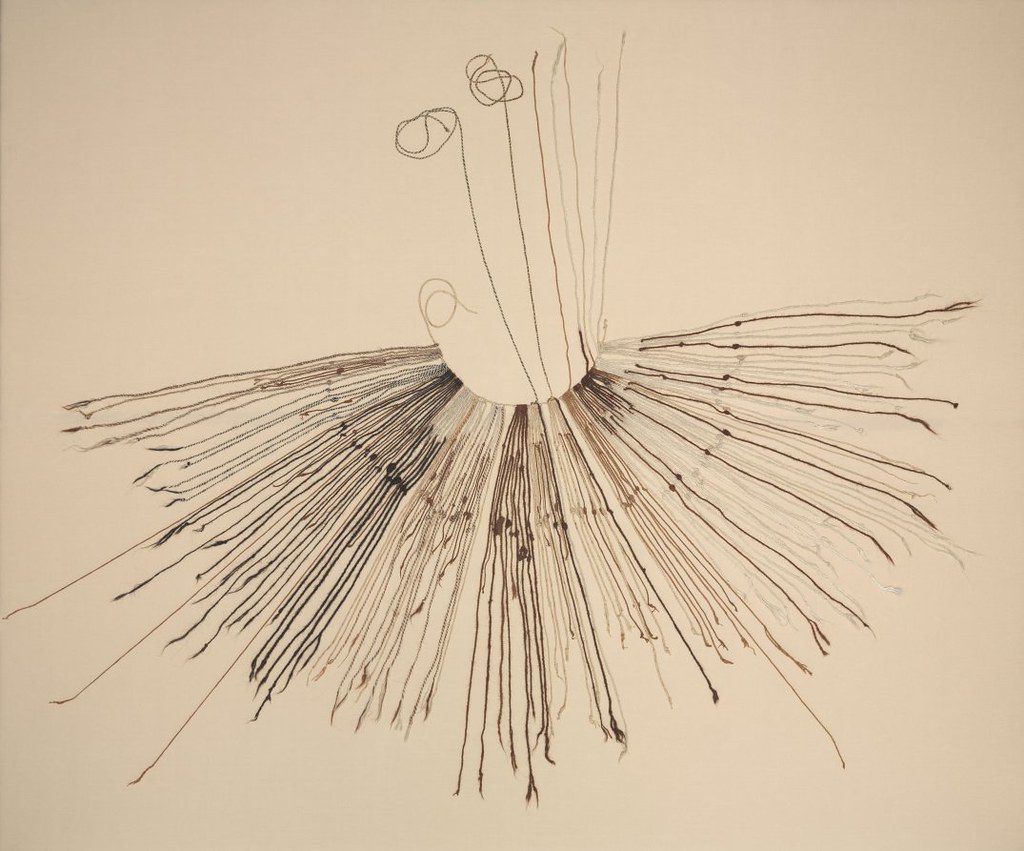
Ask what counts as a record of thought, and most answers reach immediately for writing: letters, words, sentences on a page. The Inca ran an empire spanning much of the Andes, administering millions of people, without a single written word, and recorded what they needed to remember in knots instead.
The khipu, a word meaning simply knot in Quechua, consisted of a horizontal cord with pendant strings hanging from it, each one tied at specific points using a strict positional system: a knot farthest from the main cord meant one unit, knots closer in represented tens, hundreds, higher powers of ten, with an absence of knots in a position standing for zero. Color marked what category of information a given cord held. The direction a fiber was twisted, the type of knot used, even the material itself, could each carry a separate layer of meaning stacked onto the same physical object. Specialists called khipukamayoq, keepers of the khipu, were trained to make, maintain, and read them, serving as the empire's administrators for tax obligations, census counts, labor records, and agricultural inventories.
The numerical use is well established. What remains genuinely disputed, among the researchers who study khipu today, is how far the system went beyond numbers. Some khipu show structural patterns that do not fit simple accounting: subsidiary cords branching off primary ones, in a hierarchy of secondary, tertiary, even quaternary pendants, with bends suggesting a cord was untied and reknotted at some point, implying correction and revision rather than one final, fixed entry. One researcher, Gary Urton, has argued the system may have used something closer to binary coding principles, with enough combined variables to encode more than quantities, possibly even narrative or historical content. Whether that argument holds remains an open scholarly question, not a settled one.
One piece of evidence will likely never be resolved: Spanish colonial authorities, suspecting the khipu held Inca religious or historical content they wanted erased, destroyed large numbers of them as idolatrous objects. Whatever additional information those cords carried, if they carried more than numbers at all, was lost at the moment of destruction, not through time's ordinary decay.
What the khipu settles, regardless of how the narrative-content debate resolves, is simpler and already significant: a civilization can organize a thought precisely enough to govern an empire, store it durably enough to retrieve years later, correct it when wrong, and never once put it into a sentence.