
The Thought That Needed No Brain
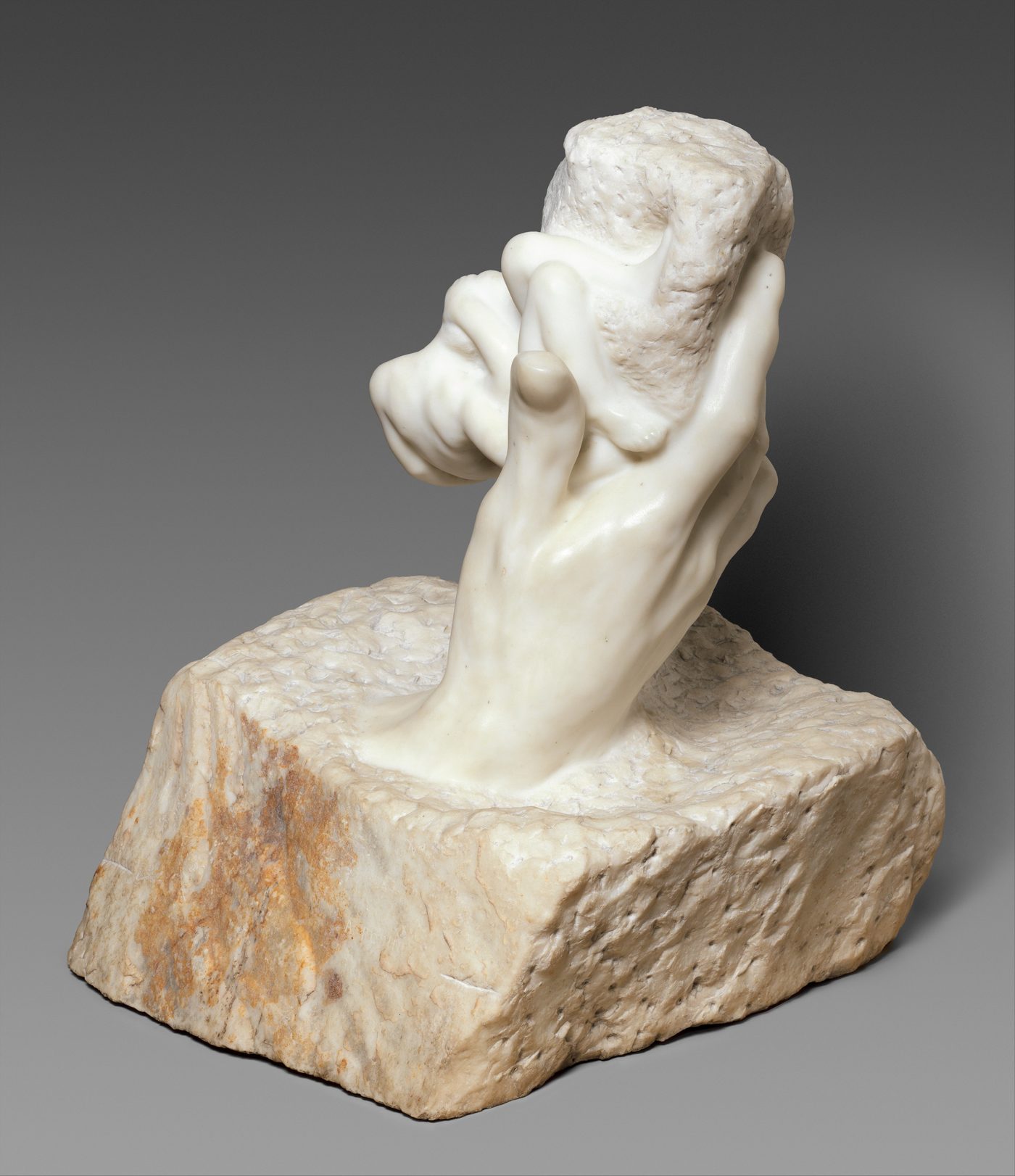
Where does the mind stop and the rest of the world begin? Philosopher Andy Clark and cognitive scientist David Chalmers opened a 1998 paper with exactly that question, and the answer they argued for was stranger than the question suggested: sometimes, the mind does not stop at the skull at all.
Their famous illustration involves two people, Otto and Inga, both trying to get to a museum. Inga simply remembers the address, consulting her biological memory. Otto, who has memory difficulties, consults a notebook he always carries, where the address is written down. Clark and Chalmers argued that if Otto's relationship to his notebook functions the same way Inga's relationship to her memory does, reliably, automatically, trusted without question, then the notebook is not simply a tool Otto uses. It is, functionally, part of his cognitive process. The thought "the museum is on Church Street" exists, in Otto's case, partly outside his head.
This is the strong version of a broader position called embodied cognition, which makes a narrower, less controversial claim first: that the body is not merely a vehicle carrying thought around, but an active participant in producing it. The evidence here is concrete rather than purely philosophical. People who are allowed to gesture while solving a math problem perform better, and often report using different strategies, than people told to keep their hands still. One plausible explanation treats the gesture not as a side effect of thinking, a visible symptom leaking out, but as part of the thinking itself: a certain thought prompts a hand movement, the hand movement gets perceived by the same brain that produced it, and that perception feeds back into further thought, a loop running partly through muscle and air rather than entirely through neurons.
Clark extended this logic to writing itself. A sentence composed on a page is not simply a brain's finished thought transcribed afterward. It is a dynamic back-and-forth: a partial thought prompts a hand movement, the hand produces marks, the eyes perceive the marks, and that perception reshapes what gets thought next. Many writers already recognize this from experience, the sentence that turns out different, and often better, than the one they intended to write before starting.
None of this requires believing a notebook or a gesture is conscious, or that the extended mind thesis is settled fact rather than a genuinely contested philosophical position, which it still is. What the strongest version of the argument asks a reader to reconsider is narrower and more concrete: whether the boundary separating a thought from a hand, a page, or a well-worn notebook was ever as solid as it felt.