
Where Does a Thought Live?
Ask most people where a thought happens, and they point to their head. This has not always been the answer, and in some traditions, it still is not.
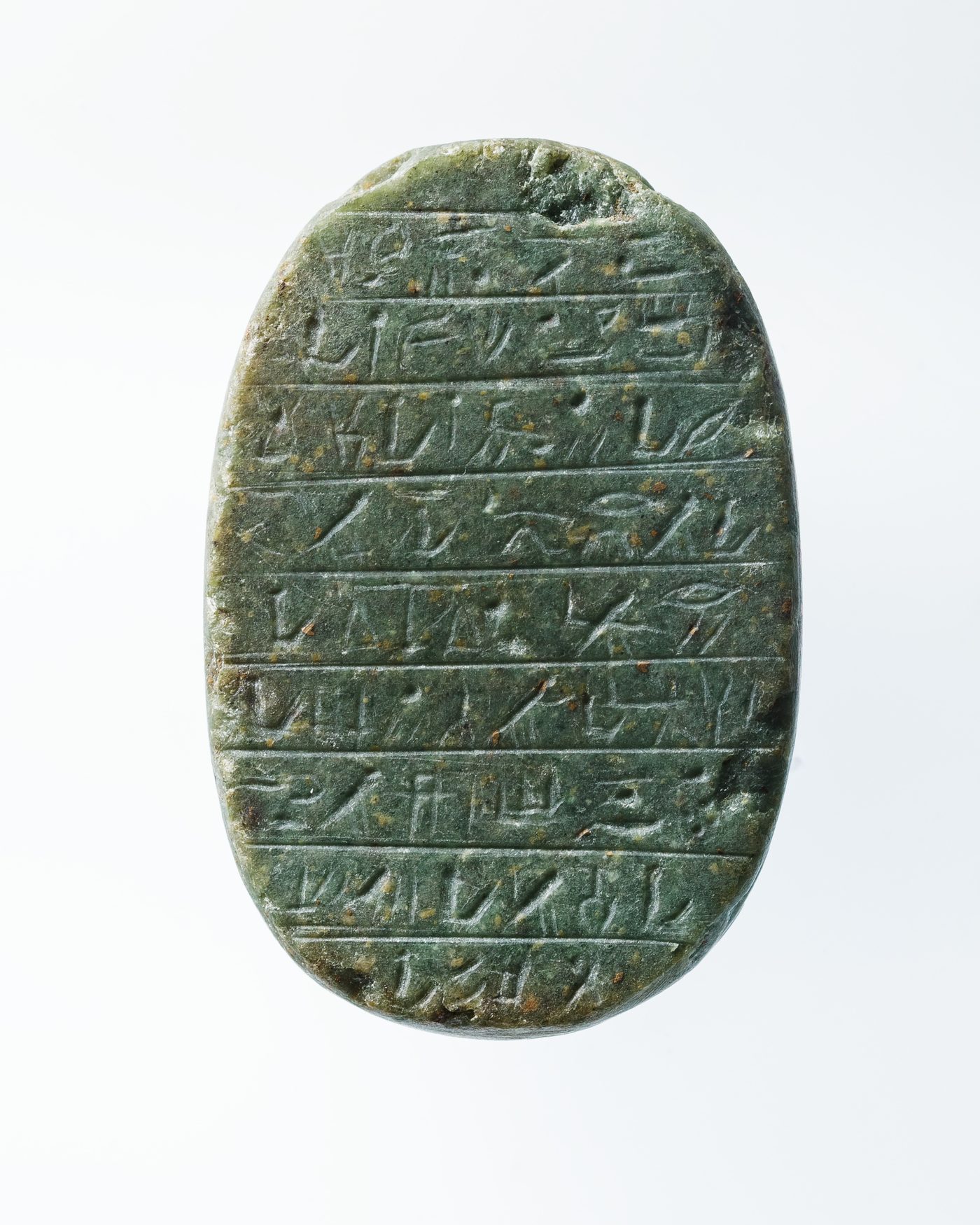
In ancient Kemet, the heart held that role. The Egyptians called it the ib, and it was weighed after death against a feather to judge a life. Thought, in this view, was inseparable from conscience. What went on the scale was not a list of deeds. It was the heart itself, the organ that thought and remembered.
In Māori tradition, accounts differ on where thought sits, but several place it in the body and not in the head alone. One scholarly account places thought in the solar plexus, emotion in the gut, and the connection to spirit in the head. Others name the belly, the puku, as the store of knowledge, and the heart, manawa or ngākau, as a seat of thought and feeling. A thought, in this view, is not a head-event alone.
Buddhist philosophy takes a different route. Early Buddhist thinkers used three words, citta, manas, and vijñāna, that English often flattens into one. In one Abhidharma account, citta names each momentary step of mental activity, arising and passing, so that a thought is a moment in a stream and not a fixed thing. Other schools drew the lines between the three words in other places.
The Stoics also treated a thought as something that arrives uninvited. Epictetus called it an impression, a phantasia, something that shows up whether it is wanted or not. What separated a Stoic from someone ruled by their thinking was not the arrival of the thought. It was what happened next: assent. Between the impression and the belief, there is a pause, and the Stoics built an entire practice, prosoche, around learning to notice that pause.
Andean philosophy frames the question differently again. Yachay, often translated as knowledge or wisdom, is not gained by sitting apart from the world and reasoning about it. It is learned by listening to land, observing the seasons, staying in relationship with a community. Knowledge, in this account, is lived and not held apart from the world.
Indigenous Australian practice offers something closer to a method than a theory. Dadirri, a word from the Ngan'gikurunggkurr people, describes deep, quiet listening, including listening to one's own thoughts. It is a practice more than a definition.
Writers describing Native North American traditions, which differ across hundreds of nations, often describe thinking as circular and not linear, informed by vision and dream as well as by step-by-step reasoning.
Modern neuroscience, working with entirely different tools, has found something that echoes part of this. The default mode network, studied extensively at Harvard and elsewhere, is active when thought drifts without a task. Buddhist philosophy had its own term, citta-santana, for a continuing stream of thought. These are not the same claim, but both treat thought as something that keeps going without being directed.
Even the judgment of a drifting thought varies. A 2026 study of students in the UK and China, by researchers at University College London, found no significant difference in how often thought wanders or what triggers it. The evaluation differed: British participants more often described its effects as non-negative, while Chinese participants emphasised negative outcomes. The authors suggest this may reflect cultural values that treat effortful attention as a moral duty, and they note that the study cannot prove that cause.
None of these traditions agree on where a thought lives, what it is made of, or whether it belongs only to the person having it. What they share is a refusal to take thought for granted, an insistence that it is worth looking at directly rather than simply living inside of.
That is the starting premise of everything else here.